
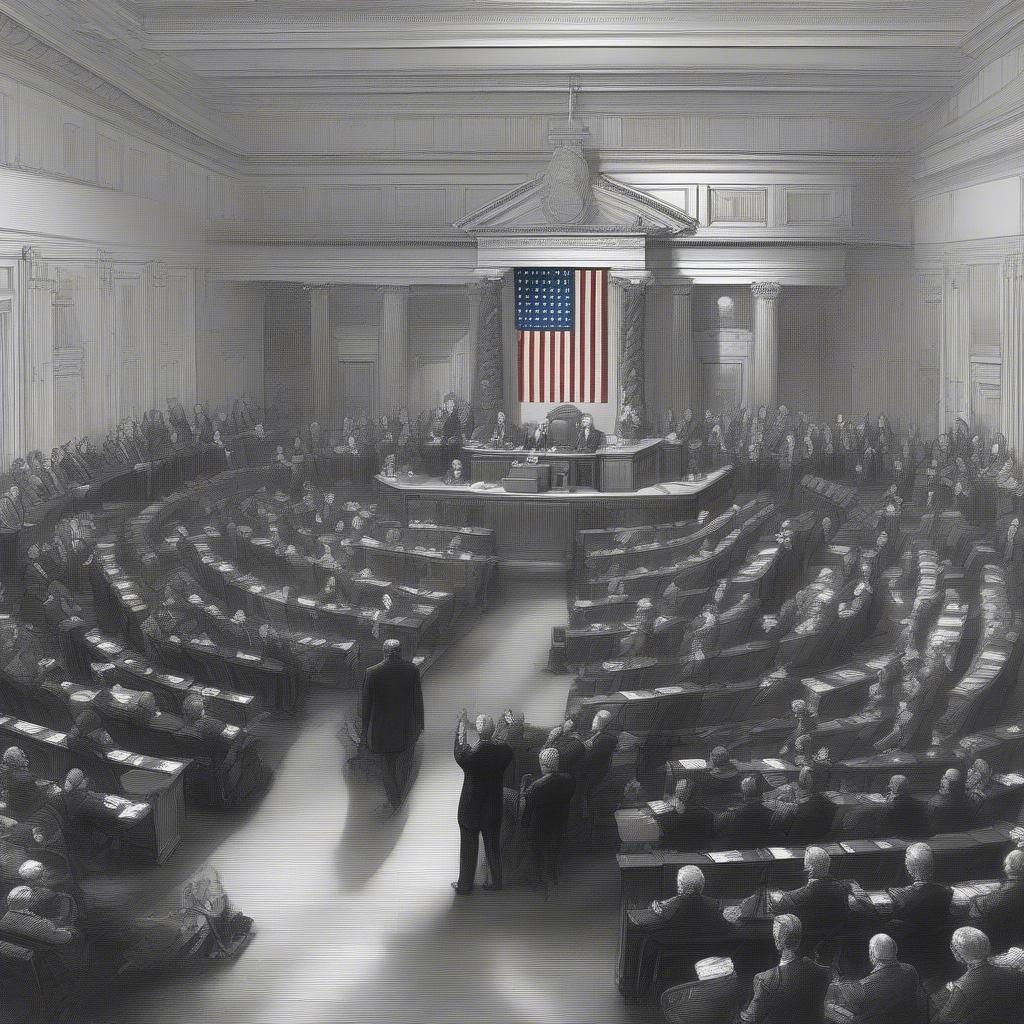
The US Presidential election process is more intricate than a simple popular vote. It hinges on a system called the Electoral College, where instead of directly voting for a candidate, citizens vote for electors who then cast the actual votes for president. But what happens when no presidential candidate secures a majority of these electoral votes? Who elects the president if no majority in the Electoral College? This crucial question highlights a less-common but constitutionally defined scenario.
Table Content:
The Twelfth Amendment to the US Constitution outlines the process when no candidate receives a majority (270 out of 538) of the electoral votes. In this instance, the election of the president is decided by the House of Representatives. It’s important to note, this isn’t the entire House voting as a single body. Instead, each state delegation receives one vote. This means California, with its 53 representatives, holds the same voting power as Wyoming, which has only one.
The House then chooses from the top three presidential candidates who received electoral votes. Voting continues until one candidate receives a majority of the state delegations’ votes. This process can be quite complex and potentially lead to extended deliberations and political maneuvering.
This scenario highlights the importance of every state, regardless of its population size, in a close presidential election. A state with a small population but a divided House delegation could potentially play a pivotal role in determining the next president.
The possibility of the House deciding the election underscores the unique and sometimes controversial nature of the Electoral College. While designed to balance the power of larger and smaller states, it can lead to outcomes that differ from the national popular vote. Understanding the contingency plan for a lack of an electoral majority is essential for comprehending the full scope of the US presidential election process. It’s not just about winning the popular vote; it’s about securing a majority of the Electoral College, or navigating the complexities of a House vote.
This historical context further emphasizes the weight of the question, “Who elects the president if no majority in the Electoral College?” The House of Representatives, acting as state delegations, shoulders this responsibility, making each state’s vote potentially decisive in the outcome of the presidential election.
The process for selecting a vice president if no majority is reached in the Electoral College is slightly different. In this case, the Senate elects the vice president from the top two candidates who received electoral votes. Each senator casts an individual vote, and a majority of senators is required to elect the vice president. This distinction further complicates the process and can lead to a president and vice president from different political parties.
House Representatives Electing President No Electoral College Majority
Understanding the nuances of this process is vital for any informed citizen. It’s not enough to simply follow the popular vote tallies; a true understanding of the presidential election requires a grasp of the Electoral College and the contingencies in place should no candidate secure a majority. This knowledge empowers voters to understand the full weight and complexity of their participation in the democratic process.
Several factors contribute to the possibility of no candidate receiving a majority in the Electoral College. A strong third-party candidate can siphon off enough electoral votes to prevent any single candidate from reaching the 270 threshold. Close elections in multiple swing states can also create a situation where the electoral votes are split in such a way that no candidate achieves a majority. Understanding these factors can help shed light on the potential for a contested election outcome.
The historical precedent for House elections of the president further underscores the importance of this contingency plan. While relatively rare, such elections have occurred in US history, shaping the course of the nation and demonstrating the practical implications of the Twelfth Amendment. Studying these historical examples provides valuable insights into the complexities and potential challenges of this process.
“The Electoral College isn’t just a formality,” says Dr. Eleanor Vance, Professor of Constitutional Law at Georgetown University. “It’s a complex system with built-in contingencies that can dramatically alter the course of a presidential election.”
 Twelfth Amendment Constitution Electoral College
“Understanding the role of the House is crucial,” adds Henry Clayborne, a prominent historian specializing in US presidential elections. “It’s not just about the number of representatives a state has, but the political makeup of its delegation. A single representative can sway a state’s vote, and therefore, the entire election.”
The implications of a House-decided election can be far-reaching, affecting policy decisions and the overall political landscape. The president elected in such a scenario may have a weaker mandate, potentially facing challenges in governing and building consensus.
“A president elected by the House might find it more challenging to enact their agenda,” comments Dr. Vance. “Their legitimacy might be questioned, particularly if they didn’t win the popular vote.”
Conclusion
Who elects the president if no majority in the Electoral College? The answer, as outlined in the Twelfth Amendment, is the House of Representatives, voting by state delegations. This process, while rarely invoked, is a critical component of the US presidential election system and underscores the importance of understanding the complexities of the Electoral College. This process ensures a definitive outcome even in contested elections, demonstrating the resilience and adaptability of the American democratic system.
FAQ
- How often has the House of Representatives chosen the president?
- Can a president be elected without winning the popular vote?
- What happens if the House of Representatives is evenly split and can’t reach a majority?
- Has a vice president ever been elected by the Senate?
- How does the Electoral College impact the campaign strategies of presidential candidates?
- What are the arguments for and against the Electoral College system?
- What are the potential consequences of a president being elected by the House of Representatives rather than through a majority of the Electoral College?