The question “Who Founded The Kkk?” unveils a dark chapter in American history. The Ku Klux Klan, a white supremacist hate group, was founded in Pulaski, Tennessee, in late 1865 by six former Confederate soldiers. These men were: John C. Lester, John B. Kennedy, James R. Crowe, Frank O. McCord, Richard R. Reed, and Calvin Jones. Initially, the Klan was conceived as a social club, taking its name from the Greek word “kyklos,” meaning circle, with the added “Klan” for dramatic effect. However, this seemingly innocuous beginning quickly morphed into something far more sinister.
Table Content:
The First Klan: From Social Club to Terrorist Organization
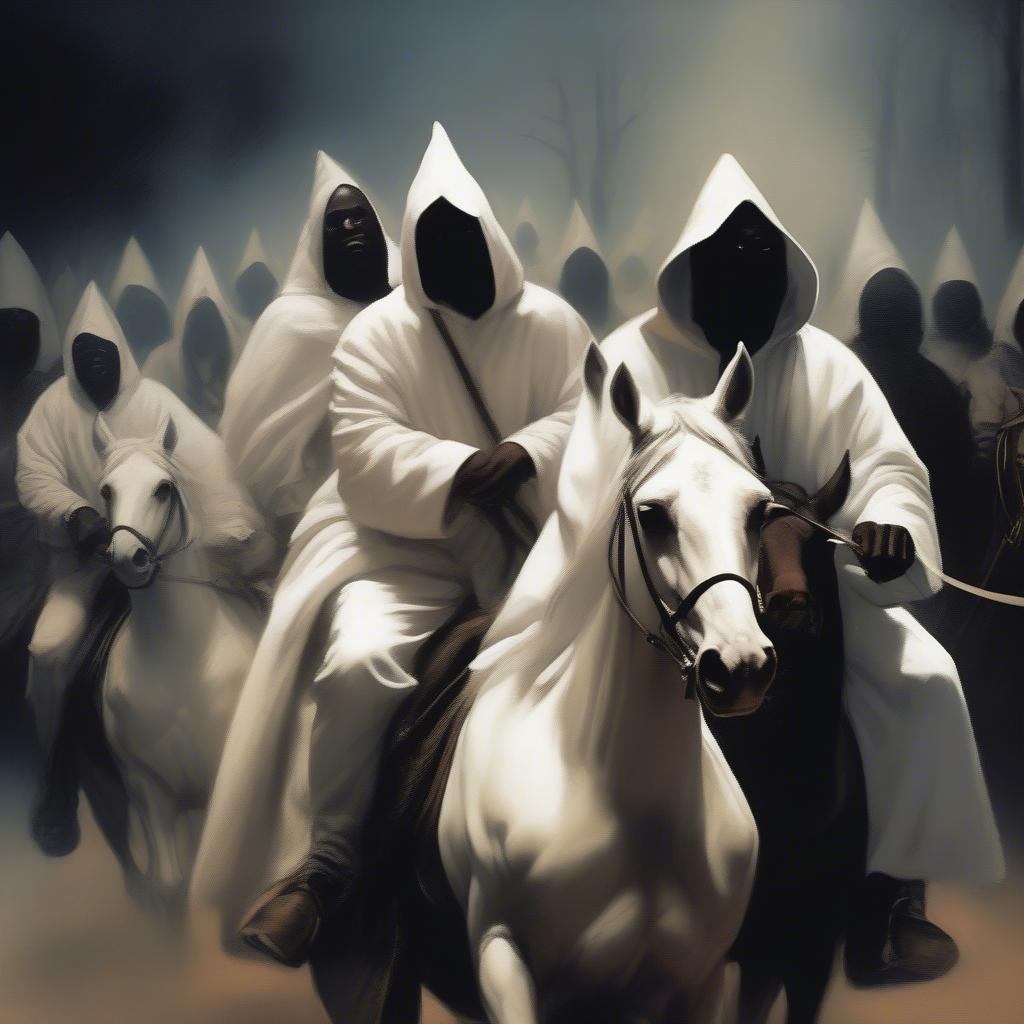
The early Klan engaged in pranks and acts of intimidation, targeting newly freed slaves and their allies. Dressed in ghostly white robes and hoods, they rode through the night, their actions fueling fear and disrupting the fragile peace of Reconstruction. The Klan’s activities escalated from harassment to violence, including whippings, arson, and murder, becoming a tool of white supremacist terrorism.
Reconstruction and the Rise of White Supremacy
The period of Reconstruction following the Civil War aimed to integrate formerly enslaved people into American society and rebuild the war-torn South. This period saw significant advancements in civil rights for African Americans, but it also faced fierce resistance from white supremacist groups like the KKK. The Klan’s violence and intimidation tactics aimed to suppress Black voting rights and undermine Reconstruction efforts.
The Klan’s Tactics: Violence and Intimidation
The KKK employed various tactics to achieve its goals. Cross burnings, a symbol now synonymous with the Klan, were used to instill fear and mark territory. Night rides, often involving violence and intimidation, became a hallmark of their operations. Lynchings, a brutal form of extrajudicial killing, were also perpetrated by Klan members. These horrific acts served to terrorize Black communities and enforce white supremacy.
KKK night riders terrorizing a Black community
The Decline and Resurgence of the Klan
By the early 1870s, the first Klan had largely dissipated, thanks in part to government intervention and prosecution of its members. However, the Klan’s ideology of white supremacy did not disappear. In the early 20th century, fueled by anti-immigrant sentiment and the film “The Birth of a Nation,” which glorified the Klan, a second iteration emerged. This second Klan expanded its targets to include Catholics, Jews, and immigrants, reaching a peak membership of millions in the 1920s.
The KKK Today: A Continued Threat
While the Klan’s influence has waned significantly since its heyday, it continues to exist in various fragmented groups across the United States. These groups still espouse white supremacist ideologies and engage in hateful rhetoric and acts of violence. The Klan’s history serves as a stark reminder of the dangers of hate and the ongoing fight for racial justice.
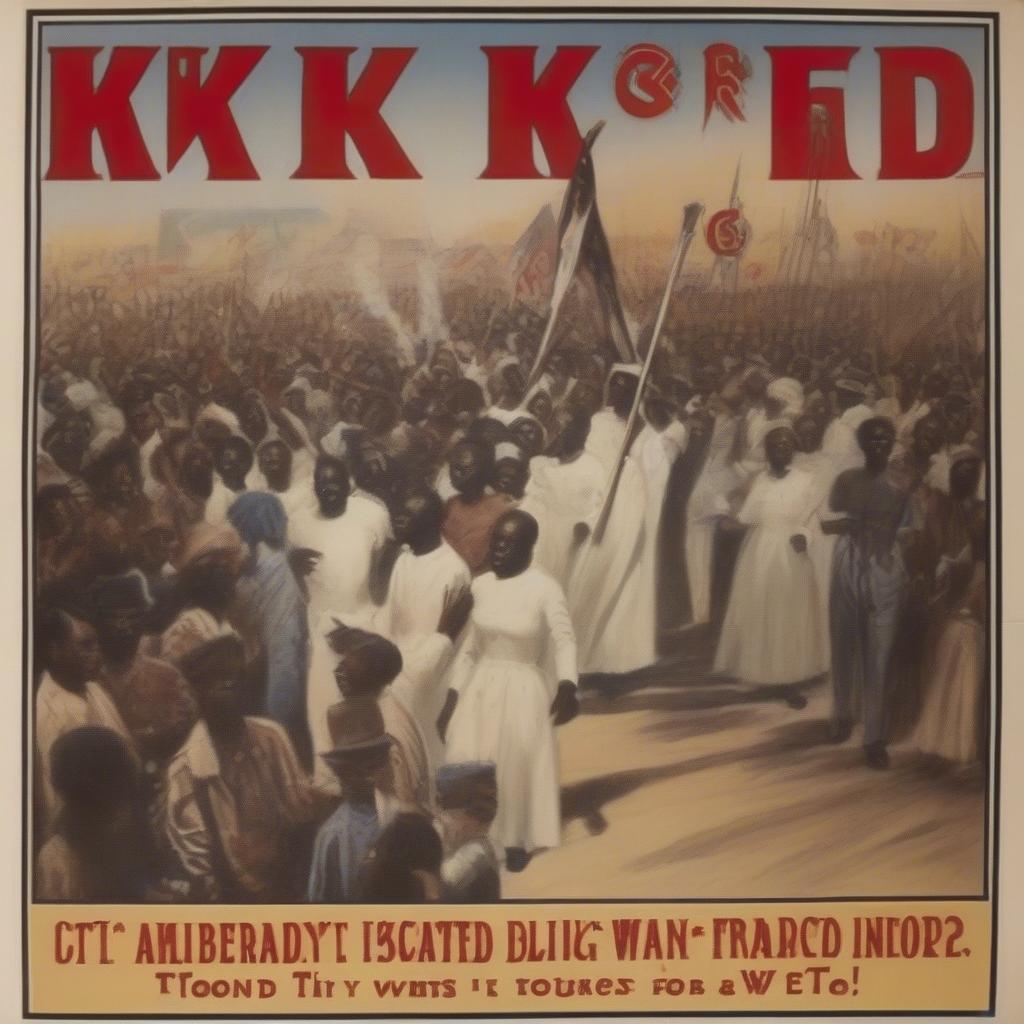 KKK propaganda poster from the early 20th century
Conclusion
Understanding who founded the KKK and the organization’s evolution is crucial to comprehending the persistent struggle against racism in the United States. The Klan’s legacy is a dark stain on American history, a constant reminder of the importance of vigilance against hate and the ongoing pursuit of equality for all.
FAQ
-
Who were the original founders of the KKK? Six former Confederate soldiers: John C. Lester, John B. Kennedy, James R. Crowe, Frank O. McCord, Richard R. Reed, and Calvin Jones.
-
When was the KKK founded? In late 1865, in Pulaski, Tennessee.
-
Why was the KKK founded? Initially, it was formed as a social club, but it quickly evolved into a white supremacist terrorist organization.
-
What were the KKK’s main targets? Initially, newly freed slaves and their allies. Later, the Klan expanded its targets to include Catholics, Jews, and immigrants.
-
Is the KKK still active today? Yes, although significantly diminished, fragmented groups still exist and promote white supremacist ideologies.
-
What were some of the KKK’s tactics? Violence, intimidation, night rides, cross burnings, lynchings, and propaganda.
-
What led to the decline of the first Klan? Government intervention and prosecution of its members.