

Qin Shi Huang, often considered the first emperor of China, unified the warring states in 221 BCE, establishing the Qin dynasty. But the path to this unification and the legacy of this emperor are far more complex than a single title. Who was this man who forged a nation? What were the circumstances that led to his rise? And how has his reign shaped the China we know today? This article delves into the life, accomplishments, and controversies surrounding the first emperor of China, Qin Shi Huang.
Table Content:
The period before Qin Shi Huang’s reign, known as the Warring States period, was characterized by constant conflict and instability. Seven major states—Qin, Chu, Yan, Han, Zhao, Wei, and Qi—fought for dominance, resulting in widespread suffering and disruption. Born Ying Zheng, the future emperor inherited the throne of the Qin state at the young age of 13. While his early reign was marked by political maneuvering and regency, he gradually consolidated his power and embarked on a series of military campaigns to conquer the other states. By 221 BCE, at the age of 38, he had achieved the unprecedented feat of unifying China, ending centuries of warfare.
Upon unification, Ying Zheng adopted the title “Qin Shi Huangdi,” meaning “First Emperor of Qin.” This title signified not just his victory but also his ambition to establish a dynasty that would last for ten thousand generations. He implemented a series of sweeping reforms aimed at centralizing power and standardizing the newly unified empire. These reforms included standardizing weights and measures, currency, and even the written script. He also initiated ambitious infrastructure projects, most notably the construction of a network of roads and canals that facilitated trade and communication throughout the empire. Another significant, albeit controversial, project was the commencement of the Great Wall, linking existing fortifications to protect the empire’s northern borders.
Qin Shi Huang, First Emperor of China
Qin Shi Huang’s reign, however, was marked by both remarkable achievements and brutal authoritarianism. He implemented Legalism, a philosophy emphasizing strict laws and harsh punishments, as the state ideology. This resulted in the suppression of dissenting voices and the persecution of scholars, particularly those who advocated for Confucianism. The infamous burning of books and burying of scholars is a dark chapter in his reign, highlighting his ruthless approach to maintaining control.
Despite the oppressive aspects of his rule, Qin Shi Huang’s impact on China’s history is undeniable. He established a centralized administrative system that laid the foundation for future dynasties. His standardization efforts fostered a sense of unity and facilitated economic and cultural exchange across the vast empire. The construction of roads and canals promoted trade and communication, connecting different regions and integrating the newly unified nation.
 Map of the Qin Dynasty's Territory in China
“Qin Shi Huang’s unification was a pivotal moment in Chinese history,” says Dr. Li Wei, a historian specializing in the Qin dynasty. “While his methods were often harsh, his achievements in creating a unified state laid the groundwork for China’s development for centuries to come.”
The construction of the Great Wall, while also involving immense human cost, became a symbol of China’s resilience and strength, enduring through millennia. It represents a remarkable feat of engineering and a testament to the centralized power of the Qin dynasty.
“The Great Wall stands as a physical manifestation of Qin Shi Huang’s ambition and determination,” explains Professor Wang Jian, an archaeologist specializing in ancient Chinese fortifications. “It symbolizes both the defensive needs and the unifying power of the newly established empire.”
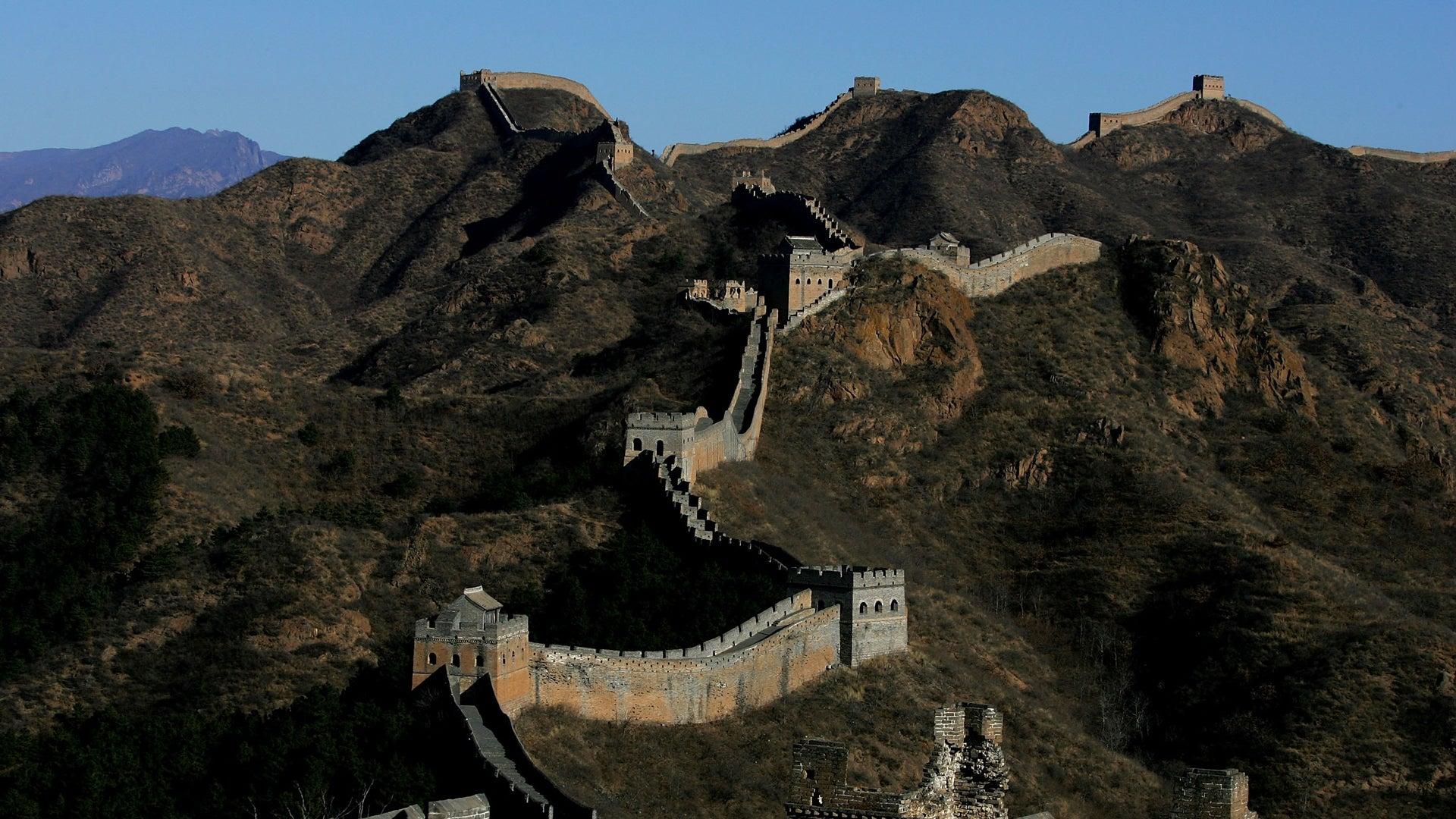 The Great Wall of China during the Qin Dynasty
Qin Shi Huang’s quest for immortality consumed much of his later years. He dispatched expeditions in search of the elixir of life and built a lavish mausoleum complex, guarded by the Terracotta Army, to ensure his power and status in the afterlife. This obsession ultimately contributed to his demise, as he died unexpectedly during a tour of his eastern territories in 210 BCE.
The Qin dynasty, however, was short-lived. Following Qin Shi Huang’s death, internal rebellions erupted, and the dynasty collapsed just a few years later. Despite its brevity, the Qin dynasty’s impact on China’s history was profound, shaping the political, cultural, and geographical landscape of the nation for millennia to come.
Qin Shi Huang remains a controversial figure, remembered for both his tyrannical rule and his unifying achievements. He was the architect of a unified China, a ruthless emperor who implemented radical reforms, and a complex figure whose legacy continues to be debated and reinterpreted. While the methods he employed were often brutal, his contribution to the formation of a unified Chinese nation is undeniable. He was the first emperor of China, a title that captures both the magnitude of his accomplishments and the complexities of his reign.
FAQ
-
Who exactly was Qin Shi Huang? Qin Shi Huang was the king of the state of Qin who conquered all other warring states and unified China in 221 BCE, declaring himself the first emperor.
-
Why is Qin Shi Huang considered the first emperor? He unified China for the first time and created the title “Huangdi” (emperor), distinguishing himself from previous rulers.
-
What were some of Qin Shi Huang’s major accomplishments? Unifying China, standardizing weights and measures, currency, and writing, and initiating large-scale infrastructure projects like roads, canals, and the Great Wall.
-
What were some of the negative aspects of Qin Shi Huang’s reign? His rule was authoritarian, marked by harsh laws, suppression of dissent, and the persecution of scholars.
-
What is the significance of the Terracotta Army? The Terracotta Army is a collection of terracotta sculptures depicting the armies of Qin Shi Huang, buried with him to protect him in the afterlife. It provides valuable insights into the military practices and artistry of the Qin dynasty.
-
How long did the Qin dynasty last? The Qin dynasty lasted only from 221 BCE to 206 BCE, collapsing shortly after Qin Shi Huang’s death.
-
How did Qin Shi Huang die? He died unexpectedly in 210 BCE during a tour of his eastern territories, possibly from mercury poisoning related to his search for an elixir of immortality.